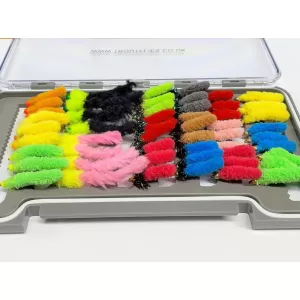
Mop flies are simple nymph patterns made from synthetic mop material (the same stuff used in household cleaning mops). They're tied with just a few wraps of mop chenille around a hook, often with a bead head for weight.
Key Characteristics:
- Mop Material: Synthetic chenille with long, flowing fibers
- Simple Construction: Just mop material wrapped around a hook
- Bead Head: Can be weighted with tungsten or brass beads
- Various Colors: Pink, orange, yellow, white, chartreuse, and natural tones
- Incredible Movement: The synthetic fibers undulate naturally in current
What They Imitate:
- San Juan Worms: Large aquatic worms
- Leeches: When tied in appropriate colors
- Egg Clusters: Particularly pink and orange versions
- General Attractors: Pure trigger patterns that provoke strikes
- Caddis Larvae: Some believe they imitate large caddis pupae
Why They're So Effective:
- Incredible Movement: The mop fibers move like nothing else underwater
- High Visibility: Bright colors are easily spotted by fish
- Substantial Profile: Represent a significant meal
- Triggers Aggression: Often provoke reaction strikes
- Versatile: Work in various water types and conditions
The Controversy:
Mop flies have sparked heated debates in the fly fishing community: