

Why colour, profile and movement matter more than you think.
When anglers talk about fly choice, they usually jump straight to patterns — buzzers, nymphs, dries, lures. But the real deciding factor, the one that quietly dictates whether a fish even sees your fly, is water clarity. Clear water and coloured water behave like two different worlds, and your fly box needs to adapt.
Below is a simple, practical guide to choosing flies that actually work in the conditions you’re facing.
Clear Water: Subtle Wins
When the water is clear, trout have time to inspect your fly. Every detail matters — colour, size, movement, even how the fly sits in the surface film.
What works best
- Slim, natural nymphs — PTNs, Hare’s Ear, Crunchers
- Sparse buzzers — black, brown, olive
- Small dries — CDC shuttlecock, F‑Flies, Small black dries
- Unweighted patterns that drift naturally
Why these flies work
Clear water gives trout full visibility. Anything too bright or bulky looks wrong, so subtlety becomes your biggest advantage. Natural tones blend into the environment, and slim profiles mimic real insects perfectly.
Top tip
If you can see the fish, assume it can see everything about your fly. Go smaller, go sparser, and slow everything down.
Coloured Water: Bold Is Better
When the water colours up — wind‑stirred sediment, algae bloom, rain run‑off — trout rely less on sight and more on movement and contrast. This is where brighter, punchier patterns shine.
What works best
- Lures with movement — Cats Whisker, Humongous, Fritz patterns
- High‑contrast nymphs — black/green, orange, hot‑spot jigs
- Flashy buzzers — holo cheeks, crisp packet
- Weighted flies to get down quickly
Why these flies work
In murky water, trout need a little help spotting your fly so using bright colours creates strong silhouettes, flashes to catch stray light, and movement guides fish toward it. You’re not aiming to perfectly mimic an insect — just to be easily noticed.
Top tip
If visibility is low, increase contrast. Black + bright is often more effective than pure neon.
The Middle Ground: Slight Tint, Big Decisions
Often anglers get it wrong here because most days aren’t crystal clear or chocolate brown — they’re somewhere in between.
Your best approach
- Start natural, then add one element of attraction (a hot spot, a rib of flash, a slightly larger profile)
- Fish two‑fly setups to cover both bases
- Use flies with movement but keep colours muted
Example combo
- Point: Olive or black buzzer
- Dropper: Small attractor nymph with a hot orange bead
This lets you test what the fish respond to without committing fully to either extreme.
Quick Guide: 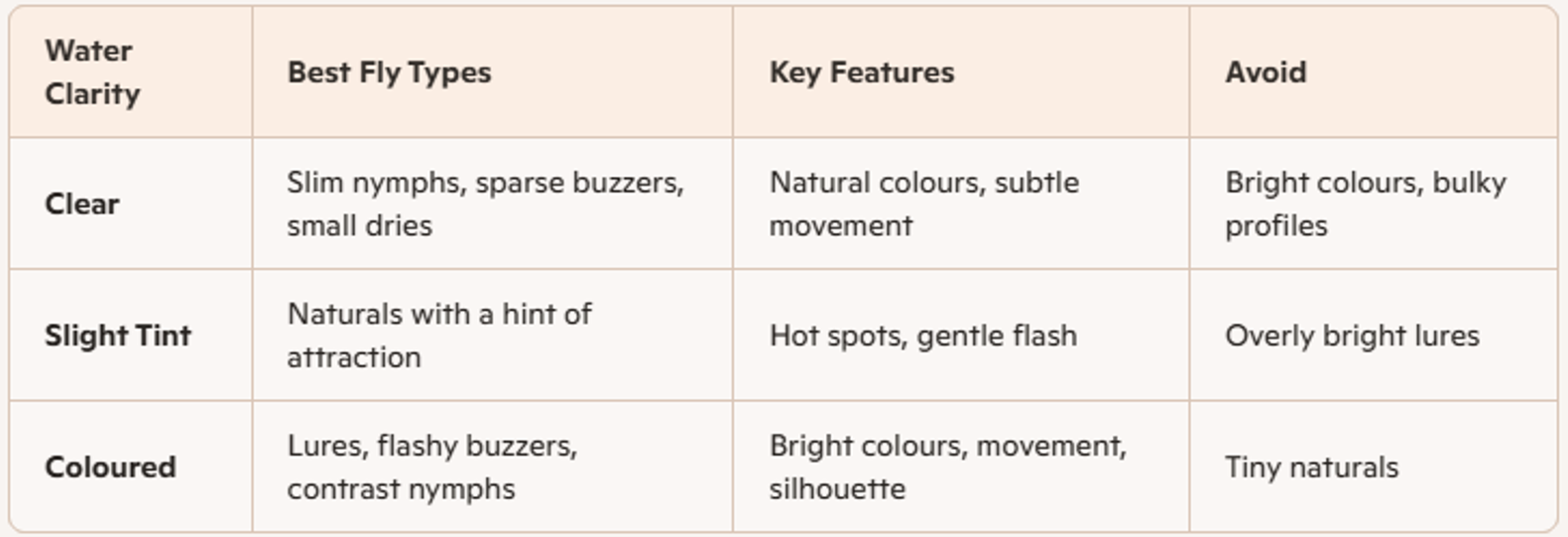
NOTE! Don’t let your fishing license run out! Buy yours here.
